
Eurasian black vulture chick hatched for the first time in UK

Experts at the Horstmann Trust are celebrating the hatching of a Eurasian black vulture (Aegypius monachus) – the first chick of its species to be hatched in the UK. The chick’s birth at the end of April is a remarkable milestone in avian conservation and is confirmed by the European Endangered Species Programme (EEP) and the Avicultural Society as the first of its kind in the UK.
The tiny chick, named Bernadette and weighing only 148g at hatching, will grow up to become one of Europe’s largest birds of prey, playing a vital role in conserving this near threatened species for the future.
DNA analysis of the egg membrane has confirmed the chick’s sex, and she will become part of the Europe-wide species breeding programme known as an EEP. This is an important addition to the captive population as this genetic line is not commonly found in the current breeding pairs.
Staff at Horstmann Trust were delighted when two members of their conservation aviary, Bernard and Twinkle, successfully laid a fertile egg. Bernadette’s arrival marks the culmination of nearly a decade of hard work encouraging the pair to breed. Due to the extremely wet weather in the weeks after laying, the decision was made to artificially incubate the egg to give it the best chance of survival. The new parents were given a wooden dummy egg to incubate whilst the real egg was kept safely in the incubation facility and tended to by Holly Cale.
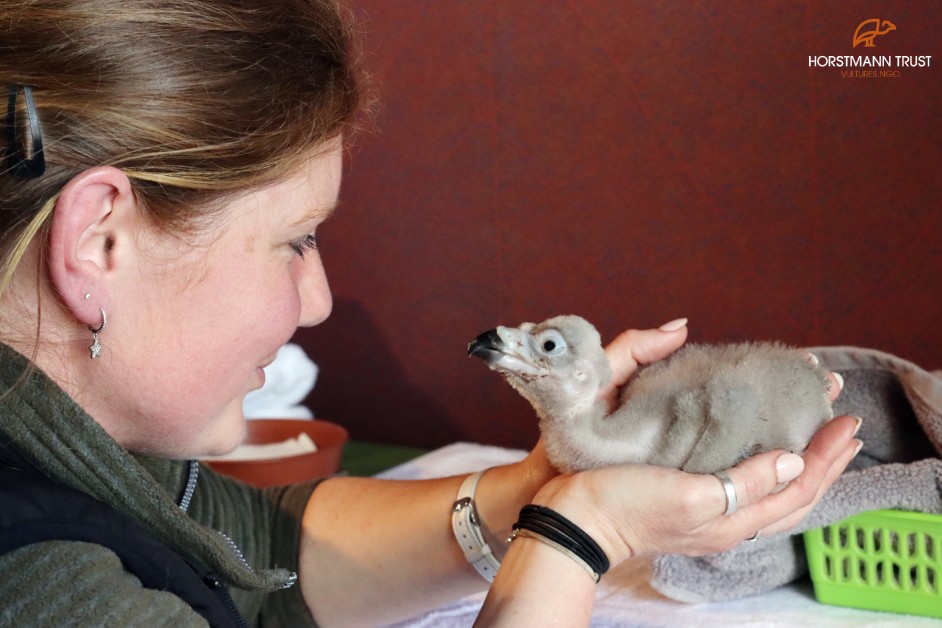
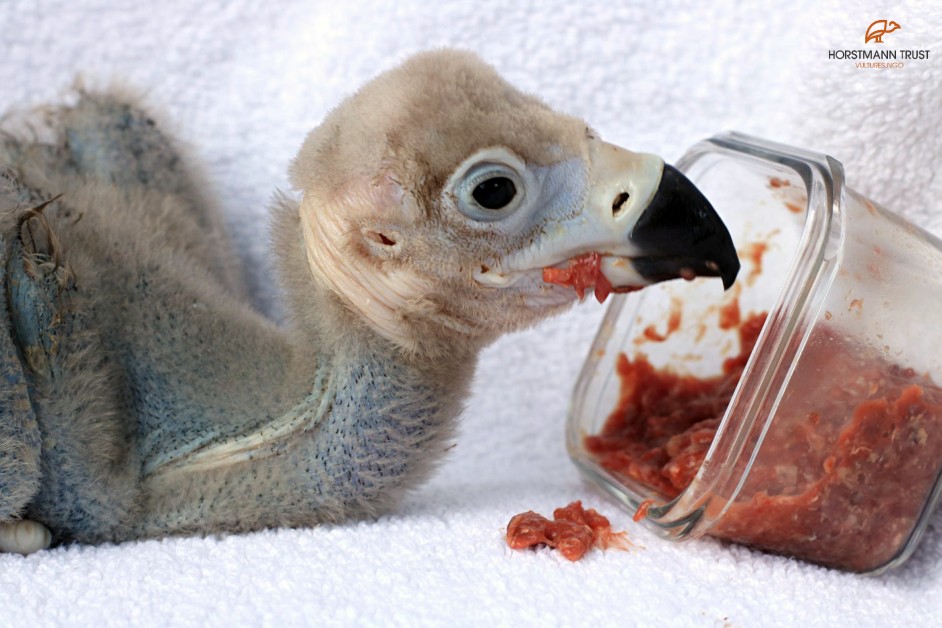
“It’s a brilliant achievement” said Holly, Curator at the Horstmann Trust and the avicultural specialist responsible for the chick’s safe hatching. “I’ve been working with Bernard and Twinkle for nearly ten years so to finally see them become parents has been really heart-warming.”
Holly spent the days after the chick’s hatch providing round the clock care and regular feeds. With any new hatchling, staff at the trust are always keen to make sure that all is well, and they begin to gain weight and grow healthily. Bernadette was initially eating very small amounts, but staff are confident that by 7 days old she had doubled in size and is now growing at a steady pace – on course for reaching 8kg, her full adult size, in just 4 months.
At 8 days old and weighing 400g, the team attempted to introduced Bernadette back into the nest for her parents to rear. After some initial trepidation and clumsy footwork on the nest from her mum Twinkle (who has inch long talons and is 20 times her size) it was decided that the risk of accidental injury was too high and to revert to plan B. She will now be reared in a carefully designed enclosure, adjacent to her parents. Here, there will be a nest which offers clear views of her parents in their aviary, allowing her to grow up with her parents as her primary focus. At around 4 months old, she will fledge into their aviary, fostering a strong bond between them.

“Our priority is always to encourage the natural rearing of a chick by its parents whenever possible. However, there are instances such as with inexperienced parents when this may not be feasible and in these situations, we use alternative methods to ensure the chick develops into a thriving member of its species. With first time parents they aren’t always sure what to do, with birds in the wild often taking a couple of attempts to successfully take to parenting” Holly explained.
Eurasian black vultures, also known as Cinereous vultures, are found across Europe and Asia but their populations are declining. Like other vulture species, they face many threats including poisoning from predator control methods and fatal collisions with wind turbines and power lines. They are also susceptible to the non-steroidal anti-inflammatory drug Diclofenac, which is responsible for the near extinction of vultures in India, causing a decline in vulture populations of up to 99%. They were the first species of vulture to reportedly have died in Europe from exposure to the same drug.
The Horstmann Trust works to conserve vultures through innovation and research and is dedicated to preventing extinction by maintaining genetically diverse populations of each of its species. This announcement follows the successful hatching of the first Rüppell’s vulture at London Zoo in 40 years, which was incubated and hatched with guidance from the Horstmann Trust. The hatching of Bernadette is the highlight of this year’s breeding season which will help ensure the future of vultures for generations to come.
